Wednesday, 6 March 2013

'Red Seas Under Red Skies' | Scott Lynch [Review]


I really wanted to fall in love with this book as much as I did the first one, The Lies of Locke Lamora. Unfortunately however, that wasn't quite the case in the end. Don't get me wrong, I did really enjoy this book and it was nice to continue the adventures of Locke and Jean in an entirely new environment. But this book just wasn't up to quite the same standard as the first one.

After a quick flash-forward en-media-res prologue, we reunite with Locke Lamora and Jean Tannen 2 years after the events of the first book. They're now living in an entirely new city, Tal Verrar, and they're up to the usual tricks. They are in the middle of their latest con and everything is going to plan. Except all of a sudden it isn't and once again Locke and Jean have to think fast and try to find a way out of it with their lives. The first third of the novel is also punctuated with brief 'reminisinces', detailing what happened in the two years between the novels and fallout of what happened in Camorr.

I loved the first quarter-ish of the book. I loved reuniting with Locke and Jean in the middle of a con and seeing them doing what they do best, while at the same time learning about what happened to them immediately after leaving Camorr at the end of the last book. Tel Verrar was interesting and it was nice to see a new place, but it was lacking something at the same time. In the previous book I completely fell in love with Camorr. It was just so fully realised and well thought out and it just leapt out of the pages and came alive. But Tel Verrar didn't. It didn't have the same depth. Maybe that was intentional but it just felt like bad or lazy writing to me. And when Locke and Jean returned to Tel Verrar in the last tenth of the book I found it hard to remember specifics of the environment or culture of the place.

Which brings me to my next point. The large middle two-thirds of the book. For the first quarter of the book it was quite Oceans Eleven-esque, like the first book was. But then it was like Lynch suddenly changed his mind and decided he wanted to write something Pirates of the Caribbean-y and twisted things in the story to fit so Locke and Jean could go be Pirates for a while. At first this change of pace and direction was really confusing. I'll admit though that as this section went on (and particurlarly after the arrival of the Poison Orchid and the introduction of Zamira and Ezri) that I started to love this. But it was still a jarring change and when Locke and Jean returned to Tel Verrar at the end to conclude the business introduced in the first third of the book I found it hard to care or remember all the details about it. It was just a jarring change of pace and I wish that Lynch had chosen one idea and stuck to it and then focused on the other in another book. Or that the two sections flowed better and meshed and melded rather than it being one then the other.

It was nice to Locke and Jean continue to grow in this book however. Whilst it was easy to pick them up again and see that they are still essentially the same people from the first book and Lynchs writing of them makes them read like the same people. But as the book went on it was obvious that they were changed. The events of the first book has emotionally scarred them and left a bit of a rift in their relationship, which continually impacts what's going on in the present. This book introduces a whole host of new characters and whilst many of these new minor characters are fairly two-dimensional I did fall in love with some of the new major characters, especially Ezri and Zamira. SPOILER ALERT[ And when Ezri dies towards the end of the book... it was just like Calo and Galdo and Bug all over again. I was heartbroken. I mean, I saw it coming but still...]END SPOILER

Overall, it was a good book, but not as good as the first. There were more dilemmas and less action this time around, which while not necessarily a bad thing itself didn't help when it was just difficult to keep track of all the various plot twists and problems. Many of the twists (particularly at the end) just didn't really seem to make much sense either and I'm not entirely sure what one or two them mean at all. Also the change of plot from what was essentially Oceans Eleven to Pirates of the Caribbean was jarring and confusing. Having said that, I look forward to the release of book 3 and more adventures with the Gentlemen Bastards and seeing how Locke and Jean escape their next and ongoing problems!

'The Lies of Locke Lamora' | Scott Lynch [Review]


As other reviewers have mentioned, this book is quite Ocean's Eleven-esque, mixed with a bit of the Godfather and set in a fantasy city similar to Venice (in that its full of canals) and also full of sharks. Whilst describing it in that way may make it seem a bit strange and might put you off, it shouldn't. This book is absolutely AMAZING. It's seriously one of my new favourite books.

Locke Lamora became an orphan in the aforementioned city (called Camorr) at a young age and bought by a man called the Thiefmaker, who turns orphaned children into his own little gang of thieves before then selling them into the bigger gangs of the city once they've grown up a bit. Locke however, has already been doing some thieving and despite his young age is full of attitude and doesn't fully foresee the conclusions to his actions. He's quickly then sold to a man known as Chains, who runs and trains a small gang of false-facers known as the Gentlemen Bastards - basically, they're con artists. That was the past. In the present, Locke and his friends are trying to pull off one of their biggest cons yet. But what they don't know is there are bigger things going on in the city, and Locke and his friends are soon going to be drawn into the heart of it all.

I just loved this book. Firstly, the world Lynch has created is just so detailed and obviously well thought out. He's obviously thought a lot about the different areas of the city, the culture, the government, and all the different people and gangs and how they all operate, as well as the wider world as a whole. And this detail just permeates throughout the whole of the novel and you even get a feel for the culture and nature of the world without Lynch necessarily having to spell it all out for you.

The book is nicely set out as well. The chapter alternates between 'present' chapters as it were, following the main action of the plot as Locke and co. begin their latest con and all the drama the subsequently unfolds afterwards. These are then punctuated with Interludes, providing other relevant details and stories related to the world and the plot. At first these mostly relate to the past of main characters such as Locke and Jean, but later these Interludes also include other brief stories relating parts of the history of Camorr, helping to flesh out the world and provide other information that directly or indirectly relates to the plot in a way that is quite natural and doesn't detract from the rest of the story or halt the plot. At first it was hard to get used to the world and the characters but I soon found myself immersed and caught up.

The characters though, are what I loved most. Locke is charismatic, intelligent and arrogant, and the best false-facer of the gang and their leader. He has many of the typical qualities of a protagonist. But he also fells increadily real. He isn't perfect. For a start, he isn't overly strong and is a terrible fighter, often relying on his friends (particularly Jean Tannen) to help him in any physical conflict. He's obviously grown significantly, particularly from the past segments to the present, but he continues to grow. The aforementioned Jean Tannen is Locke's right hand man and his perfect partner - he possesses all the qualities Locke lacks and acts the muscle for the gang in many instances. But Jean obviously has a big heart as well and is more than just a bruiser. Next are the Sanza twins, Calo and Galdo. They're just so lovable and funny and mischievious. They're sort of Lynch's version of the Weasley twins from the Harry Potter series. I fell in love with them instantly. Finally there's the apprentice of the gang Bug, who obviously has a big heart and wants to fit in and sometimes tries too hard but you can't help but like anyway. They're all just such great main characters and I found myself loving them all and rooting for them all the way through, even as things became increasingly difficult and dangerous for them. SPOILER ALERT[ I must admit as well, I was truly heartbroken when Calo and Galdo were killed off as they were my favourites up to that point. And then I was heartbroken further by the death of Bug. Why Lynch, why!?]END SPOILER

Readers should be warned that this book involves a LOT of swearing etc, but it does feel natural. It doesn't feel like Lynch is just throwing it in for the sake of it like it does in some books. And it can be gory in places too, but it's not that bad.

I knew when I started reading this that there was a sequel book, and when I was reading it I assumed it would be the first in a trilogy. Some googling prior to writing this review tells me that Lynch has planned out 7 novels in this series, which interests me and I can't wait to see what happens next and obviously stuff is set up to be followed up in the next book(s). At the same time though, the story in this book is self contained, and you could easily not read any other books in the series but have a feeling of closure regarding the characters.

Overall, this book is just amazing. It grabs hold of you early on and just doesn't let you go. You become drawn into the world and the characters and the drama that quickly unfolds and escalates. The book is brilliantly written and the world beautifully developed and realised. I cannot recommend this book highly enough and I can't wait to stuck into book 2!

'The Left Hand of God' | Paul Hoffman [Review]


I had quite a few issues with this book. It was good and enjoyable but it was quite hard to get into and a little confusing and infuriating at times. I don't know how much of this was because it took me like 6 months to read (I only really read it occasionally on my breaks at work and I would have like 10 minutes max to do so) or whether it's the book itself.

So basically, the story follows a young man/boy called Cale, who's an orphan in a this post-apocalypticy (I assume anyway, it's never really made clear) world in a place called the Sanctuary, which is run by militant asshole priests called Redeemers who really abuse these boys in their care. Cale is pretty badass himself, for reasons which are finally revealed about halfway through the book SPOILER ALERT[ - basically, he had a bit of brain trauma or something when he was young and now he can kinda foresee what his opponent is going to do in battle and so is pretty damn awesome in a fight]END SPOILER. One day, he and friends Kleist and Vague Henri see something they shouldn't in one of the forbidden areas of the Sanctuary and decide they have to runaway and escape, which they do. And from there the main plot begins as they encounter this new world and try to survive and make the most of it.

Cale was an alright protagonist. He's a bit of an ass at times and I found it kinda hard to really relate to him, but at the same time I could kinda sympathise with him and I liked how his character grew and developed over the course of the novel. Kleist and Vague Henri were nice secondary heroes, fairly typical, in that one is smart but more quiet and follower-y while the other is a bit of a smartass-y type guy. Hoffman introduces a wide variety of characters and it does kinda become hard to keep track of all of them an their motives, although that may be because of how long it took me to read.

From the writing style and stuff it felt like Hoffman was trying to be a bit like Stephen King or Justin Cronin with the covering of multiple perspectives and stuff but it just kinda fell flat.

The world itself was interesting but a little confusing as well, and I would have appreciated a few ore details about it and stuff.

Overall, it was a good book, and I liked it, but I felt that Hoffman didn't really fully explain it all and the reasons people did various things and the ending was just a bit rubbish and silly. Basically, I'm not desperate to start reading the sequel.

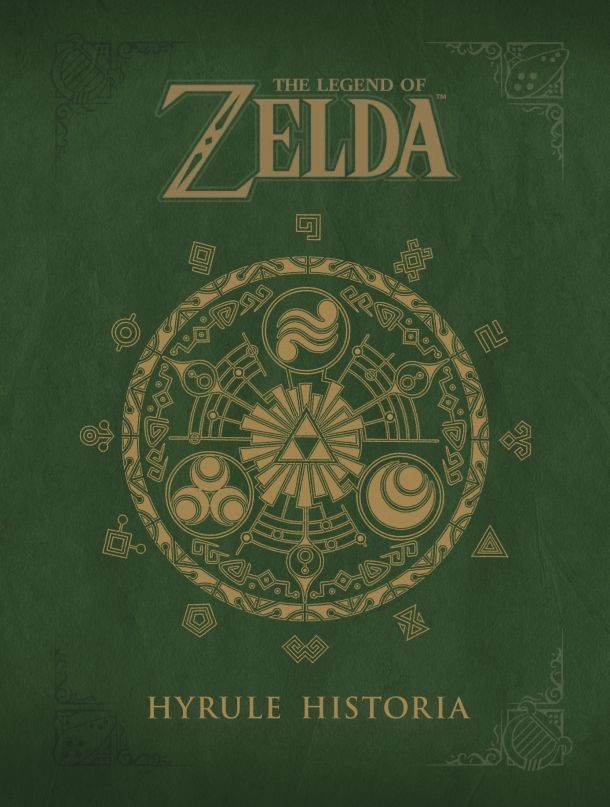
'Hyrule Historia' | Shigeru Miyamoto [Review]


This was a really good book. It was released to tie in to Zelda's 25th anniversary in 2012 and to tie in to the latest Zelda game also released in 2012: Skyward Sword. As a result the first 3rd of the book focuses on Skyward Sword, before then going into a detailed discussion of the history of Hyrule, including an official timeline and order for the games (which I'm sure will please any Zelda fan). This is then followed by a large concept art section and finally there's a sample of the Skyward Sword manga.

The Skyward Sword section was nice and interesting, and it was interesting to see all the different designs for various characters, including Zelda, Fi, Link etc. but this also included the different locations and the minor characters as well, such as the Surface races and the people who inhabit Skyloft. It was nice to see all of this but I do wonder if it was all necessary and the pages could have been used for something else.

Next, the timeline section of Hyrule Historia was undoubtedly interesting and useful. It finally provides fans of the series with a definitive timeline for the games and then goes details what happened in each game and how it all relates to each other and the history of Hyrule, complete with pictures from the games and other tidbits of information.

The concept art section was delightful as well. It was nice seeing some of the concept art for all the different games, and I only wish this section was bigger and there was more art for each of the games, particularly the 'bigger' games such as Ocarina of Time, Twilight Princess, Majora's Mask, Wind Waker etc. And if maybe there was more general secrets or background information too.

And the preview of the skyward sword manga was a nice addition, but I don't think it's something that will necessarily appeal to all fans.

Overall, it's a good and interesting book, I just wish that there was a bit more background information and more art etc. from other games rather than just the focus on Skyward Sword, although I understand why there is a focus on that game.

'The Wise Man's Fear' | Patrick Rothfuss [Review]


So, The Wise Man's Fear continues the story of Kvothe, also known as Kvothe the Bloodless, Kvothe the Arcane, Maedre, The Flame, and so on and so forth. You may have heard of him.

So, this book shakes up the setting a bit from the previous book, which is good. Initially Kvothe starts out still at the University where he spent the majority of the previous book, and it starts out with much more of the same. Kvothe struggling to make ends meet at the University and pay his tuition. Then before too long, things are shaken up a bit and Kvothe must leave the University for a while and he ends up travelling to Vintas to the court of a powerful nobleman, and from there his journey takes him to unexpected and amazing places.

I was glad that Rothfuss changed the setting up a bit as I was getting a little tired of the fact that Kvothe's adventures at the University, while interesting in the first book, were pretty much unchanged from that book ad featured a penniless Kvothe. It was nice to see some different places, including SPOILER ALERT[Severan, Ademre and (!) the Fae!]END SPOILER. All of these places were exciting and interesting, but at the same time I felt that while Kvothe was obviously learning and training during these adventures, not much was really happening and I was hoping to hear some more of the exciting stories, such as how he became Kvothe Kingkiller, something which will obviously be revealed in the next book. Nothing much happened with the Chandrian either, and since Rothfuss will hopefully build them up to some kind of final confrontation, time is running short for that too. But at the same time, Rothfuss doesn't necessarily follow the cliche path of storytelling and it may be that Kvothe won't really stop them or whatever. Although Rothfuss did include places with strange traditions and languages that Kvothe has to learn and overcome which is somewhat cliched for fantasy...

It was nice to see his relationship with Denna advance further and continue to develop, and since they've made no mention of Denna in the 'present' I'm interested in how this will end. It was also nice to see Kvothe building some relationships with other people, I particularly liked Tempi and Dedan.

Things are continuing to progress in the 'present' too as well as the 'past' and I'm interested to see how this will be tied up in the third book. Bast continues to be an interesting and mysterious character and I can't wait to learn more about him and his motivations.

It's also nice that at one point Kvothe and Bast make up a story to some of the locals at the Waystone about a legendary called Chronicler to make a point to the real Chronicler about how stories can be exaggerated and get carried away. It was amusing and an important segway.

Overall, it's a good book, but I felt that not much really happened in it and it seemed to lack some of the excitement of the first book. Whilst Kvothe's journeying and training etc. was obviously important it did mean this book lacked something from the first. Hopefully the third book will return to the fine form of the first with some of the more exciting stories to come!

'Through the Ever Night' | Veronica Rossi [Review]


This sequel to 'Under the Never Sky' was brilliant. Rossi has found a great balance between action and character development, and the characters feel a lot more well rounded this time.

We rejoin Perry and Aria as they reunite having spent the winter apart. Perry is now Blood Lord of the Tides and has to struggle to learn to be the best Blood Lord he can whilst making sure his tribe survives. Aria knows she has to find the Still Blue in order to save Perry's nephew Talon and to find a safe place for everyone now that the Aether is becoming worse and increasingly devastating and violent. They have to struggle to be together whilst trying to accomplish their various tasks, which is very difficult.

This book was a lot better than 'Under the Never Sky'. In that first book, a lot of time was spent establishing the world and exploring it, and both Perry and Aria began as quite annoying characters. But in this book, we do not need as much establishment and Perry and Aria have already grown enough already that I felt more compelled by them and wanted to root for them more. They've become much more well rounded, and they continue to develop and grow and learn in this book, as do other major characters such as Marron and Cinder. And we see the nice development and growth of a character from the first book who I didn't really expect to see again: SPOILER ALERT[ Soren - it'll be nice to see how he develops and grows in the third book now he's surrounded by "savages" and now he's on the outside, how he'll cope with his DLS]END SPOILER.

It was nice to see Perry as Blood Lord and how he had to grow into the role. He spent a lot of the previous book complaining about Vale and how he should do things differently. But now he is Blood Lord he finds the task a lot more difficult than he imagined and it was nice that he had to learn how to be a better leader and to motivate his tribe.

It was also nice to see more of Roar this time around as well, as he is definately one of my favourite characters. And it was nice that he and Aria had a nice, close relationship without there being the worry that they might fall for each other. And we finally get to see the much talked and worried about Liv as well which was nice. I would definately recommend reading Rossi's novella entitled 'Roar and Liv' before this book, as it helps to flesh out the characters even more in your mind.

Rossi also found a good balance between action and character development in this book, and a lot of the action and plot also was a lot more relevant to the overall plot or was important, unlike in the last book where there seemed to be longer periods of action or character development, and some of the conflict seemed a little unnecessary.

Overall, this is a really good book. Fans of the first book will definately be pleased by it, and even if you were a little unsure about the first book, then I would recommend picking this one up as it is much better than that first one in my opinion. It certainly seemed to fly by!

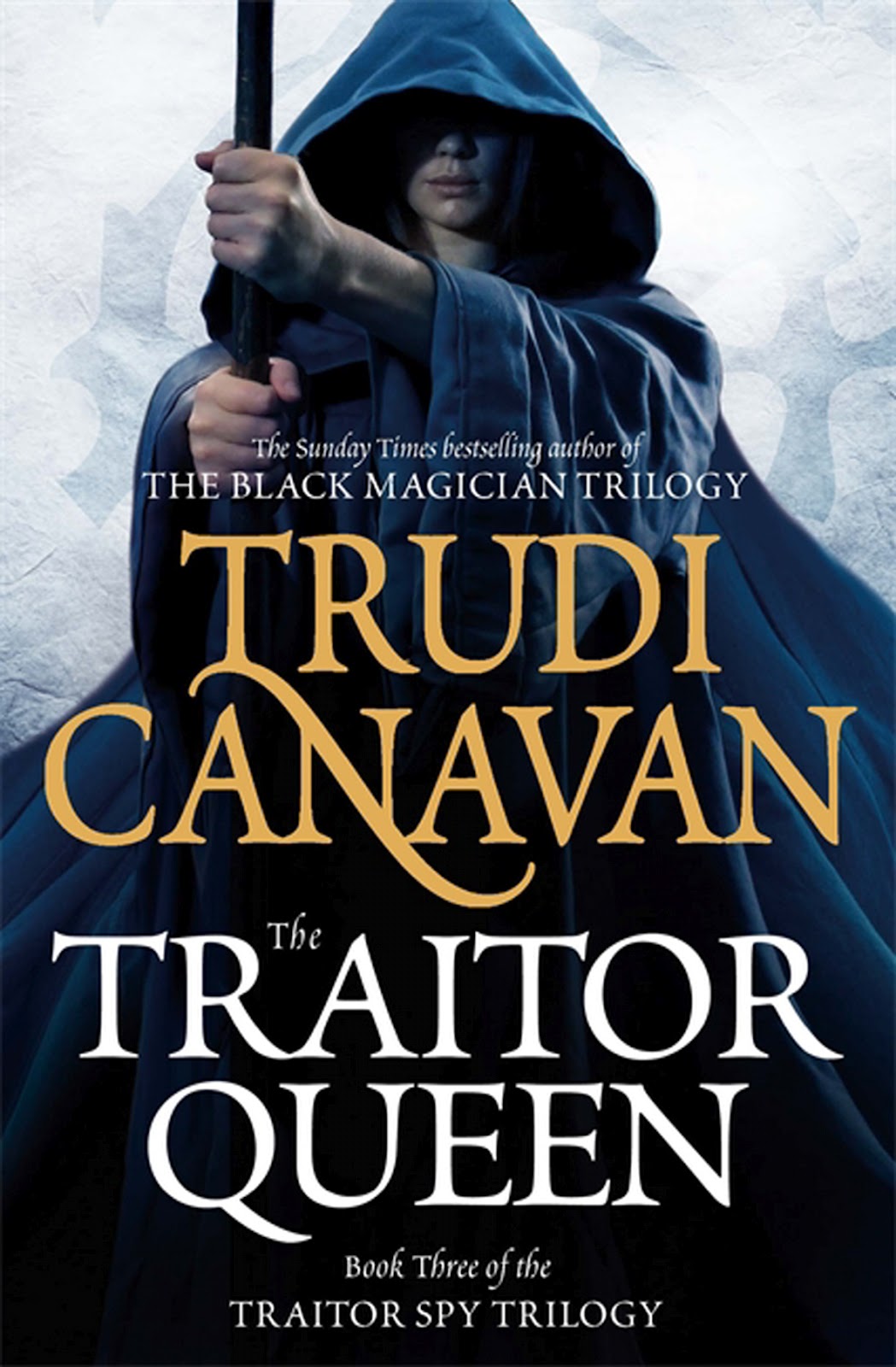
'The Traitor Queen' | Trudi Canavan [Review]


I wanted to really like this book, and this sequel trilogy to the Magician's Guild trilogy by Canavan, but I just couldn't. I mean, yes, it was interesting and all but it just couldn't live up to the first trilogy and looking at some of the other reviews for this book it seems like an opinion shared by many fans.

Warning, there may well be spoilers ahead, but some of this is stuff mentioned or referred to in previous books in this trilogy.

Firstly, the plot. It continues that set up in the first two books in the trilogy, with Sonea and Regin heading to Sachaka to meet with the Traitors, whilst Lorkin and Dannyl try to stop the Sachakan King from reading Lorkin's mind now that he's returned to Arvice from the Traitor's home. Meanwhile, Lilia deals with being a black magician and trying to capture the rogue Skellin.

The plot just moves at a really slow pace, and whilst it is nice to see some character development in these chapters, I do feel a lot of it in the first half could have been condensed. Then in the second half of the book the majority of the action takes place really quickly and it kinda feels a bit rushed. Also, there were some parts of the story that I just really didn't care about.

Plus, I did kind of like Lilia and Anyi, and I guess it was important and nice to see how things have changed and are different for the next generation. But the whole Skellin plot seemed really irrelevant in the end. I thought it might somehow tie back in to what was happening in Sachaka but it didn't and it was just there really to give Lilia and the magician's in Kyralia something to do. Also, it ended really quickly and was rather an anti-climax SPOILER ALERT[apart from, you know, the face Cery died. Heart = broken. But I did kinda see it coming] END SPOILER.

I felt like I was supposed to like Lorkin as a main character, but I just didn't. He was rather boring and flat. And I also felt like I was supposed to like the Traitors and want to root for them, but I didn't either. I mean, I liked that they wanted to abolish slavery and stuff, but other than that they just seemed ruthless and arrogant and no better than the Ashaki they were trying to overthrow really.

I wanted to see more of Sonea being a badass like she was in the first trilogy, but she wasn't. I kind of understood why, since she's spent the last 20 years feeling like an outcast and stuff and missing Akkarin, but I wanted to see her regain her former life and courage and she didn't. She didn't really do anything in the end... SPOILER ALERT[ and don't even get me started on the whole ReginxSonea thing - it was just stupid. Canavan obviously just wanted to give Sonea a new love interest but didn't want to or couldn't spend time developing a whole new character for her]END SPOILER.

What did interest me though was Canavan's hint in the epilogue of another nation in this world that is starting to develop new technologies such as a "ballshooter" which sounds remarkably like a gun to me, and made me think that the minefire mentioned earlier in the book could be gun powder which hadn't occurred to me at the time. This sounds like an interesting idea and I hope it's an avenue that Canavan explores further in another book(s). It would be interesting to see how the magician's dealt with such a technological revolution.